Plants that send process wastewater to the sewer

Where does your plant discharge?

Free checklist for the slug discharge control plan your sewer authority may require: what it must include and when to call the treatment plant.

  • Free to read
  • No sign-up until the draft
  • Hands off to the right door
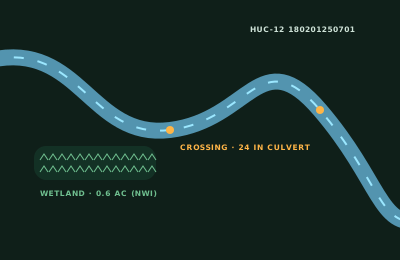
WETLAND · 0.6 AC (NWI) CROSSING · 24 IN CULVERT HUC-12 180201250701

ePlan fills in

  • EPA facility IDs
  • Treatment plant
  • Discharge permits

How it works

Slug control plan checklist, from one answer

  1. Enter the plant address, daily flow and the chemicals stored.
  2. ePlan checks whether you're a significant industrial user and lists the plan's required parts.
  3. Read the checklist free. Storing oil on site? Start an SPCC plan draft.

What you get

Slug control plan checklist and 1 more document

The check is free. The paperwork after it is drafted at the SPCC Plan Template, Filled In for Your Site door.

The first draft

Slug control plan checklist (free)

  1. Discharge practices and batch discharges
  2. Stored chemicals
  3. Immediate notice to the treatment plant
  4. Five-day written follow-up
  5. Spill prevention: storage, transfers, loading
  6. Containment, run-off control and training

Modeled on: 40 CFR 403.8(f)(2)(vi) minimum slug control plan elements
Next · 2

SPCC plan for oil storage

  1. Oil containers and capacities
  2. Containment and drainage
  3. Inspections
  4. Spill response

From public data

What ePlan fills in, and from where

25,000 gallons

a day of process wastewater makes a plant a significant industrial user, which the treatment plant must evaluate for a slug control plan
Source: 40 CFR 403.3(v) and 403.8(f)(2)(vi), eCFR

Ready for the paperwork?

Draft a self-certified SPCC plan for a yard, farm or shop with 10,000 gallons of oil or less. Tanks, drainage and spill steps filled in. Free to read.

SPCC Plan Template, Filled In for Your Site →

Questions

Slug Control Plan for Industrial Wastewater: what people ask

Who decides if I need a slug control plan?

Your control authority, usually the public treatment plant. It must evaluate each significant industrial user for a slug control plan within a year of designating it, and significant users must tell it immediately of changes that affect the potential for a slug discharge.

Source: ecfr.gov

What must the plan include?

At minimum: discharge practices including non-routine batch discharges, stored chemicals, procedures for immediately notifying the treatment plant with written follow-up within five days, and if needed, spill prevention such as storage inspections, transfer and loading procedures, containment and worker training.

Source: ecfr.gov

What is a significant industrial user?

Any user subject to categorical pretreatment standards, plus users that discharge an average of 25,000 gallons a day or more of process wastewater, make up 5% or more of the treatment plant's capacity, or are designated by the control authority.

Source: ecfr.gov

The rules this door follows