Septic permit application
- Owner and property
- Lot size, use and bedrooms
- Water source and wells
- Site plan notes: house, tank, drainfield, setbacks
- Soil or perc results
- Proposed system type
Homeowners · septic
Enter the property: ePlan pulls soils, slope and flood data, estimates the system type and drafts your county septic permit application. Free to read.
ePlan fills in
How it works
What you get
The first draft is free to read. Each document after it is drafted from the same confirmed facts.
From public data
More than one in five U.S. households depend on a septic or small cluster system, and states, tribes and local governments regulate them.
Source: U.S. EPA
Questions
States, tribes and local governments regulate septic systems, usually through a county health or environmental health office. EPA does not issue them, so rules on soil testing, setbacks and system types vary by state and county.
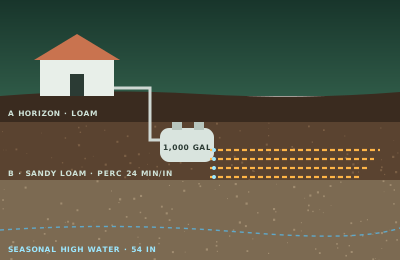
Wastewater flows from the house to a buried tank, where solids settle. The liquid then goes to a drainfield, and the soil treats it as it percolates down. If the soil can't do that, the system fails.
Yes, as a screen. USDA's Web Soil Survey maps soils and rates their limitations for septic tank absorption fields. It is map-scale only; the on-site soil evaluation or perc test decides the permit.
Related doors

Where is the project site in New York?
Where is the project in Washington?

What's your event, and where is it?

Which jurisdiction is the plan for?
Where is the Colorado parcel?
Where is the land you want soils for?
Answer it and the project exists. Three more questions, then the draft.