Italian businesses bringing contractors on site

Where will the contractor work?

Draft the DUVRI when a contractor works on your premises: shared risks, measures and coordination. For Italian client employers. Free to read.

  • Free to read
  • No sign-up until the draft
  • Every fact cites its source
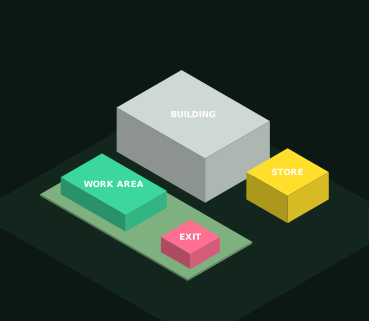
BUILDINGWORK AREASTOREEXIT

ePlan fills in

  • Client company
  • Contractor company
  • Site address
  • Man-days test
  • Special risks

How it works

DUVRI, from one answer

  1. Enter your premises and describe the contractor's job.One answer starts the project. ePlan names it and looks up the place.
  2. ePlan checks the 5 man-day exemption and drafts the shared risks and measures.3 more questions, each with a "not sure yet" way out.
  3. Read the DUVRI free, then download it to sign and attach to the contract.The draft marks what to check (amber), what to pick (blue) and what to fill in (violet).

What you get

DUVRI and 2 more documents

The first draft is free to read. Each document after it is drafted from the same confirmed facts.

The first draft

DUVRI (documento unico di valutazione dei rischi da interferenze)

  1. Client, contractor and contract
  2. Place, dates and work areas
  3. Activities that overlap
  4. Interference risks
  5. Measures to remove or reduce each risk
  6. Safety costs stated in the contract

Modeled on: D.Lgs. 81/2008, art. 26(3) and (3-bis)
Next · 2

POS (piano operativo di sicurezza) for a building site

  1. Company and site roles
  2. Tasks and equipment
  3. Risks and measures
Next · 3

DVR (documento di valutazione dei rischi)

  1. Risks by job
  2. Measures
  3. Improvement plan

From public data

What ePlan fills in, and from where

5 man-days

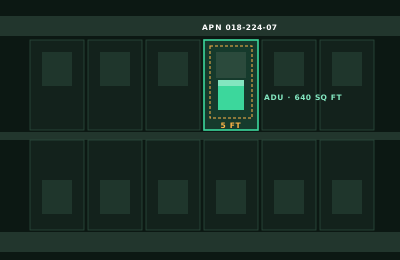
is the job size at or below which no DUVRI is needed, unless the work carries high fire risk, confined spaces, asbestos or other listed risks
Source: D.Lgs. 81/2008, art. 26(3-bis), Normattiva

Questions

DUVRI: what people ask

Who writes the DUVRI?

The client employer (datore di lavoro committente). It sets out the measures to remove, or reduce to a minimum, the risks from interference between the firms, is attached to the contract and is updated as the work, services and supplies change.

Source: normattiva.it

When is a DUVRI not needed?

For intellectual services, plain supplies of materials or equipment, and jobs of up to 5 man-days, unless they involve high fire risk, confined spaces, carcinogenic, mutagenic or biological agents, asbestos, explosive atmospheres or the special risks in Annex XI.

Source: normattiva.it

Do safety costs have to be in the contract?

Yes. Contracts, subcontracts and supply contracts must state the safety costs specifically, on pain of nullity, and those costs cannot be cut in the price discount.

Source: normattiva.it

The rules this door follows