Town and county engineers on federal-aid projects

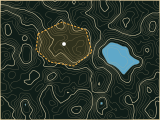
Where is the federal-aid project?

Match your federal-aid road, trail or bridge job to the FHWA categorical exclusion list in 23 CFR 771.117 and see what the DOT will ask. Free.

  • Free to read
  • No sign-up until the draft
  • Hands off to the right door
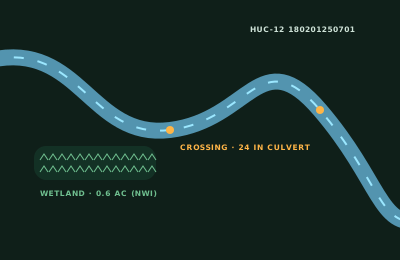
WETLAND · 0.6 AC (NWI) CROSSING · 24 IN CULVERT HUC-12 180201250701

ePlan fills in

  • Project limits
  • Streams and wetlands
  • Flood zone
  • Historic places
  • Listed species

How it works

CE category check, from one answer

  1. Enter the limits, the work type and the federal share.
  2. ePlan matches a 771.117 category and screens historic places, parks and water.
  3. Read the free check. Need the documentation? Start a categorical exclusion memo draft.

What you get

CE category check and 3 more documents

The check is free. The paperwork after it is drafted at the Categorical exclusion memo (or short EA) in the agency's format door.

The first draft

CE category check (free)

  1. Project description and limits
  2. Matching 23 CFR 771.117(c) or (d) category
  3. Federal funding amount
  4. Unusual circumstances screen
  5. Historic places, parks, water and species nearby
  6. What the state DOT form will ask next

Modeled on: 23 CFR 771.117
Next · 2

NEPA categorical exclusion memo

  1. Action and CE category
  2. Unusual circumstances
  3. Determination
Next · 3

Section 106 letter to the SHPO

  1. Undertaking and area of effect
  2. Historic properties
  3. Proposed finding
Next · 4

Section 4(f) evaluation outline

  1. Protected property
  2. Use and impacts
  3. Avoidance and minimization

From public data

What ePlan fills in, and from where

$6,000,000

in federal funds, adjusted yearly for inflation, is the line under which a federally funded project is a listed FHWA categorical exclusion
Source: 23 CFR 771.117(c)(23), eCFR

Ready for the paperwork?

Draft a NEPA categorical exclusion memo or short environmental assessment for a federally funded project, in the agency's format. Free to read.

Categorical exclusion memo (or short EA) in the agency's format →

Questions

FHWA Categorical Exclusion Check: what people ask

What's the difference between (c) and (d) CEs?

Actions on the (c) list normally need no further NEPA approval from FHWA. Actions under (d) become CEs only after FHWA approval, unless a state agreement covers them, and the applicant must document that the conditions are met.

Source: ecfr.gov

Can the state DOT approve my CE?

Yes, where FHWA and the state have a programmatic agreement. It lets the state DOT make CE determinations for FHWA on listed (c) and (d) actions. Each agreement runs five years at most and can be renewed.

Source: ecfr.gov

What can knock a project out of a CE?

Unusual circumstances: significant environmental impacts, substantial controversy on environmental grounds, significant impacts on Section 4(f) or historic properties, or conflict with environmental laws. FHWA and the applicant then study whether the CE still fits.

Source: ecfr.gov

The rules this door follows